Protect your dealer website from evolving consent risks. Discover why a cookie banner is only part of the equation, how CIPA is increasing scrutiny, and why greater visibility and control over cookies, pixels, scripts, and other tracking technologies matters.
Your website is connected to an increasingly complex digital ecosystem.
Advertising platforms, analytics tools, chat providers, digital retailing solutions, tracking technologies, and other automotive vendors can all introduce cookies, pixels, scripts, and other technologies to your website. Each may play an important role in your digital strategy, but together they create a consent-management challenge that dealers can no longer afford to overlook.
Simply displaying a cookie banner is not the same as controlling what happens behind it. The real question is: Do you know what technologies are loading on your website, when they are loading, and whether the proper consent controls are being applied?
For dealers, that distinction is becoming increasingly important.
The Consent Challenge Behind the Banner
Many dealers work with numerous third-party technology providers at the same time. As those integrations change, so can the cookies and tracking technologies operating across the website.
A traditional consent management platform may provide shoppers with a visible banner while still leaving gaps in the identification or management of third-party technologies. That creates an important distinction between appearing to manage consent and having technical controls in place to manage what loads based on a visitor’s consent preferences.
A more comprehensive approach starts with understanding what is actually running on the website, classifying those technologies appropriately, and controlling them according to the applicable consent settings.
Why CIPA Has Raised the Stakes
One reason consent management has received greater attention is the California Invasion of Privacy Act, commonly known as CIPA.
CIPA was originally enacted as a wiretapping and communications-interception statute, not as one of the modern consumer privacy laws dealers may be more familiar with such as the Telephone Consumer Protection Act (TCPA) or the California Consumer Protection Act (CCPA). More recently, plaintiffs have attempted to apply its provisions to certain website technologies, including pixels, cookies, and other tools that allegedly transmit information without proper authorization.
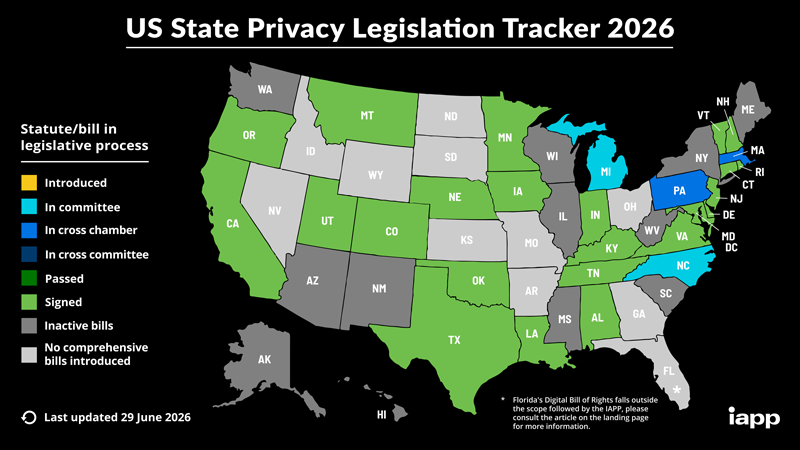
Image Source: IAPP
That development changes the conversation around website consent.
Rather than focusing only on traditional privacy requirements, dealers also need to consider whether certain technologies may begin collecting or transmitting information before the appropriate consent has been provided.
The result is a broader risk environment where having a banner alone may not be enough. What matters is what is actually happening behind that banner.
“My State Doesn’t Have a Privacy Law.”
For some dealers, the first question about consent management is simple: Why do I need this if my state doesn’t have a comprehensive privacy law?
The challenge is that your website is not limited to shoppers who live in your state.
Visitors can access a dealer website from anywhere, and the technologies operating on that site do not stop at state borders. That means focusing only on the laws where your dealership is physically located can leave out an important part of the risk equation: where your website visitors are located and how website tracking technologies interact with them.
CIPA is one example of why this matters. Dealers from Texas, Ohio, Pennsylvania, and Florida, have already seen claims – not just California. Automated testing tools can be used to look for gaps in website consent controls, while proxies and VPNs can obscure a visitor’s actual location. So even if your state does not have a broad consumer privacy law today, that does not necessarily mean consent management is irrelevant to your dealership.
The question then shifts from, “Does my state require a cookie banner?” to “Do I have visibility and control over the tracking technologies operating on my website for every visitor?”
Transparency Benefits Shoppers, Too
Consent management is often discussed entirely in terms of legal risk, but there is another reason it matters: trust.
Today’s shoppers interact with brands across websites, advertising platforms, social media, apps, and other digital channels. Giving them clear information about data collection and meaningful control over their preferences can contribute to a more transparent digital experience.
For dealers, that means thinking about consent management as part of the overall website experience, not simply as a legal checkbox. A well-managed consent experience should make it easier for shoppers to understand their choices without creating unnecessary friction.
Think Beyond the Banner
Consent management is no longer simply a question of whether your state has passed a comprehensive privacy law. Dealer websites serve shoppers across geographic boundaries while relying on an increasingly complex network of third-party technologies.
That makes visibility and technical control more important.
Ask whether your current solution can identify the technologies operating on your website, control when appropriate technologies load, adapt as your technology stack changes, and give shoppers meaningful control over their preferences.
The takeaway: “My state doesn’t have a privacy law” is no longer a complete consent strategy. DealerOn and Termly give dealers an automotive-focused approach designed to provide greater visibility, stronger consent controls, and a more transparent experience for shoppers.

How DealerOn and Termly Help
DealerOn’s Termly Consent Management solution is designed to give dealers a more comprehensive approach to managing website consent.
Termly can scan a website to discover and classify cookies and trackers, provide shoppers with consent choices, and help control certain scripts based on those preferences. DealerOn builds on that foundation with an implementation designed for the realities of automotive websites and their extensive third-party technology ecosystems.
For dealers looking to take a more conservative approach to CIPA-related risk, DealerOn’s CIPA Mitigation configuration can treat unknown traffic, including traffic associated with VPNs or proxies, as ‘opt-in’. This means the site requires the visitor to actively provide consent before applicable tracking technologies are enabled, rather than assuming consent unless the visitor opts out. This is intended to provide stronger controls around technologies that should not load until consent has been provided.
Combined with DealerOn’s cookie-classification and server-side rendering work, the goal is to move consent management beyond the appearance of compliance and toward greater technical control over the technologies operating on the site.
To get started with Termly and learn more about DealerOn’s compliance solutions, visit us here.
This article is for informational purposes only and does not constitute legal advice. Dealers should consult qualified legal counsel regarding their specific obligations and risk.