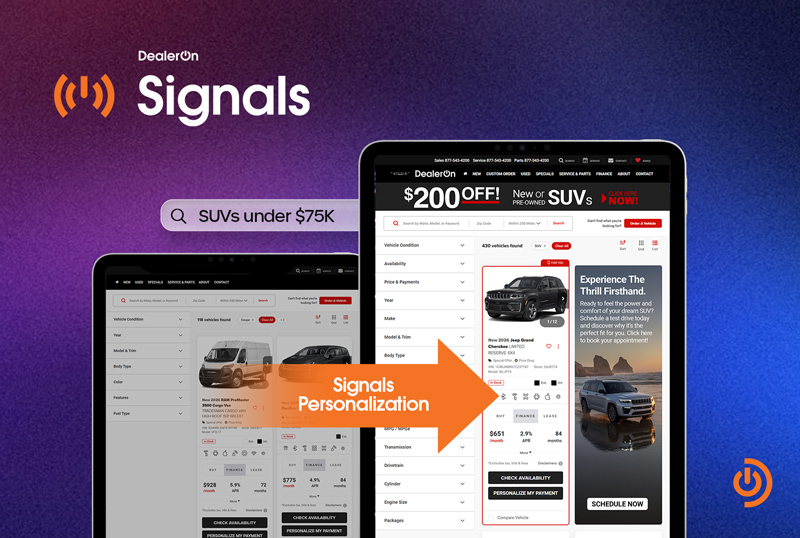
Learn how website personalization can help you turn existing traffic into more engagement, relevant shopping experiences, and lead opportunities.
Website personalization can help you make existing traffic more valuable by connecting shoppers with relevant, targeted messaging.
You work hard to bring shoppers to your website.
You invest in search, digital advertising, email, social media, inventory merchandising, and customer retention. You make sure your inventory has prices and photos. You promote your offers. You give shoppers a place to research, compare vehicles, and take the next step.
But once shoppers arrive, what kind of experience are you giving them?
Are you showing them inventory that matches their interests? Can they easily return to vehicles they have already viewed? Does your messaging reflect how they arrived, what they are shopping for, and where they may be in the buying journey?
Or are you giving every visitor the same experience?
When you are focused on increasing leads, the first instinct is to think you need more traffic to your website. Sometimes, the bigger opportunity is helping the traffic you already have find a more relevant reason to engage.
Website personalization helps you make each visit more relevant from the start.
Your Shoppers Do Not All Arrive With the Same Intent
Every shopper comes to your website with a different goal.
One may be comparing new SUVs. Another may be looking for a used vehicle within a certain budget. Others may still be researching.
When your website treats all of them the same, you may be asking shoppers to do too much work to find the relevant messaging to their needs.
When your website treats all of them the same, you may be asking shoppers to do too much work to find the relevant messaging to their needs. That friction can make it easier for them to leave before they engage.
Personalization helps you reduce that friction by making your website experience more relevant to each shopper’s behavior, interests, and available intent data.
Personalized Experiences Are Becoming an Expectation
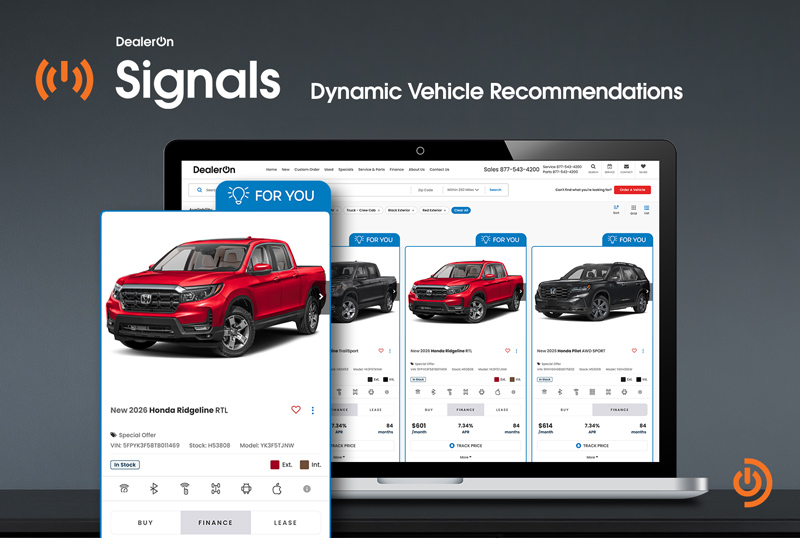
Personalized vehicle recommendations use shopper behavior and preferences—such as price, body style, mileage, color, engine, and drivetrain—to surface more relevant inventory and help visitors continue their search.
Your shoppers are used to digital platforms that remember what they viewed, recommend relevant options, and help them continue where they left off. Those experiences have shaped what they expect from your website.
Vehicle recommendations are one of the clearest ways you can make your website more personalized, increasing time on site and engagement rates. A shopper who repeatedly views used all-wheel-drive SUVs within a particular range may benefit from seeing similar available vehicles instead of having to start another broad search.
Personalized recommendations can consider factors such as:
- New or used inventory
- Mileage
- Price
- Body style
- Exterior color
- Engine
- Drivetrain
These details help create a more relevant inventory experience based on what each shopper has already shown interest in.
Support the Shopping Journey With Personalized Messaging
Inline banners and targeted ads can help you communicate with shoppers as they browse. This can be especially valuable on mobile devices, where visitors may scroll through multiple vehicles and page sections during a single session.
Keep Your Advertising and Website Messaging Connected
The experience you promise in an advertisement should continue after the click.
UTM parameters can help you identify the campaign, source, or message that brought a shopper to your website. You can then use that information to support a more consistent landing experience.
For example, someone who clicks an advertisement focused on a specific vehicle type should not land on a generic page with unrelated messaging. Your website should reinforce the reason that shopper clicked.
This consistency matters because disconnected experiences create friction. When your advertisement makes one promise and your website delivers something different, the shopper may question whether they are in the right place.
By using UTM parameters alongside onsite behavior and other available data, you can create a more connected path from your advertising to website engagement.
What DealerOn Signals Helps You Do
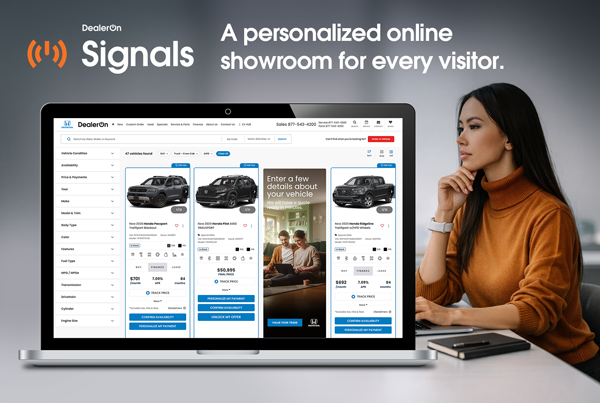
DealerOn Signals creates personalized website experiences for every customer, delivering highly targeted and relevant offers based on the shopper’s individual history, behaviors and interests.
DealerOn Signals is a personalization engine that enables a true data-driven website experience.
Signals can use onsite browsing behavior, advertising data, and CDP integrations to help you deliver more relevant messages without requiring shoppers to use a traditional consumer login.
With Signals Personalization, you can tailor website content based on shopper behavior and available intent data. It can help you connect shoppers with relevant inventory, guide them toward vehicles aligned with their interests, and support a more personalized path through the shopping journey.
In practical terms, Signals helps your website respond to what visitors are already telling you through their behavior.
Watch the Personalization Webinar
Watch Erin Zaborac, DealerOn Director of Marketing, and Tina Cuatto, VP of Product Development, explore practical ways you can create more relevant website experiences in “Clicks to Connections: Personalization Strategies for Dealership Websites”.
Learn More About DealerOn Signals
Your website should not treat every shopper the same.
With DealerOn Signals, you can create more relevant shopping experiences that help guide your visitors toward the inventory, content, and actions that matter most to them.
Learn more about DealerOn Signals and discover how personalization can help you turn more of your existing traffic into meaningful engagement and lead opportunities.