
Website performance isn’t just about speed; it’s about creating a seamless experience that keeps shoppers engaged and ready to convert. Google’s Core Web Vitals (CWV) highlight the most critical measures of usability, from how quickly content loads to how smoothly pages respond and remain stable.
In this article, we break down what dealers need to know about CWV, real vs. synthetic performance data, and how DealerOn is helping dealers stay ahead with new tools, reports, and partnerships built to keep their sites fast, stable, and shopper-ready.
A lightning-fast website isn’t just nice to have; it directly impacts conversions. A 0.1 second decrease in mobile load time can yield measurable lifts: 10.1% more conversions on travel sites, 8.4% on retail sites, and 8.6% more page views for luxury brands.* That said, speed alone isn’t the goal; true performance means delivering a smooth, reliable user experience. Fast isn’t always good, and good can mean sacrificing some of your fast.
Understanding Core Web Vitals
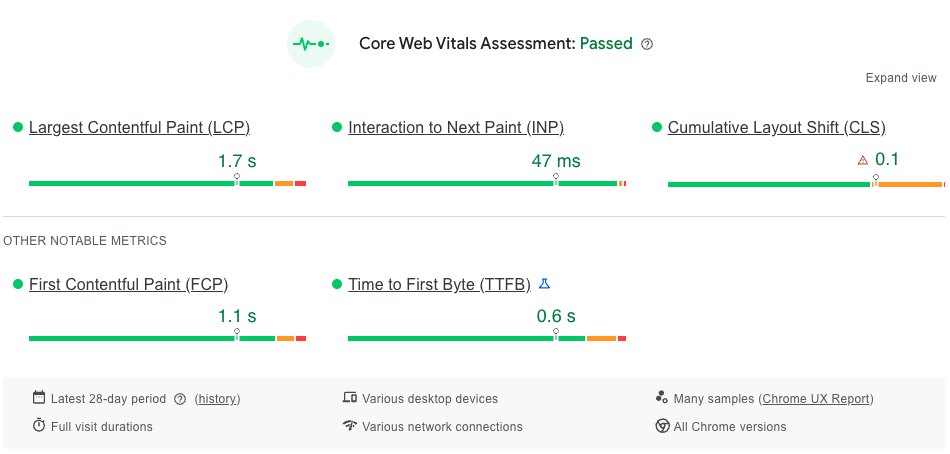
Google’s Core Web Vitals (CWV) capture key aspects of real-world browsing:
- Largest Contentful Paint (LCP): measures when the main content is visible
- Interaction to Next Paint (INP): gauges responsiveness and interactivity
- Cumulative Layout Shift (CLS): tracks visual stability, ensuring webpages don’t unexpectedly jump around
Supporting metrics like First Contentful Paint (FCP) and Time to First Byte (TTFB) help diagnose issues even though they don’t directly determine CWV pass/fail status.
Measuring Performance: Real vs Synthetic Data
Google’s PageSpeed Insights blends two perspectives:
- CrUX (real-world) data: selectively collected from actual Chrome users across devices and network speeds, offering a 28-day rolling picture of webpage performance
- Synthetic (Lighthouse or Lab) data: lab tests purposely run on an emulated device with network throttling that can quickly reveal bottlenecks and give deeper diagnostic insights
The key takeaway? CrUX shows how some visitors experience your webpages, while synthetic data helps pinpoint issues so you can take action quickly.
What Affects Speed, and Who Owns it?
Website page performance is a shared responsibility across all players in the automotive digital space. Your Website Platform is responsible for the architecture, content delivery networks, and code optimizations (e.g. lazy loading). Dealers and agencies impact speed with everyday design decisions: video vs images for example. It’s important for dealers to review updates to your website with your website partner and identify the impact on performance to determine if the cost is worth the return.
Website speed is a shared responsibility, shaped by platform architecture, design choices, OEM requirements, and third-party integrations.
There are many impacts to website speed and performance outside the control of you and your website partner. Program mandates are a great example. Things like required analytics tags or marketing scripts can impact website speed but can oftentimes not be removed from a dealer website. Vendors and third-party integrations cause website performance to drag, but sometimes the proverbial finger gets incorrectly pointed at them. It’s important to measure the impacts of the third-party integrations on their own, as well as measuring the integrations on your site as a group.
While GTM offers a centralized way to deploy marketing, analytics, and third-party scripts, it also carries performance risks if unmanaged. Every container adds JavaScript to the webpage, increasing load and execution times.
DealerOn’s Edge
DealerOn is actively improving CWV metrics like CLS and INP across core pages and are excited to preview new tools including the Third-Party Performance Impact Report and Third-Party Scorecard Report to help dealers measure the performance of their websites and third-party application providers. The OnMarketplace app store further streamlines integrations, ensuring trusted partners meet strict standards for speed, security, ASC tagging and accessibility. To learn more about DealerOn’s approach to partnering with vendors and supporting dealers with website performance, check out one of our latest webinars on all things Core Web Vitals.
Fast, stable, and responsive websites are no accident. With disciplined performance tracking, thoughtful vendor selection, and the right platform partner, dealers can keep their website running efficiently while keeping shoppers engaged.
*https://www.deloitte.com/ie/en/services/consulting/research/milliseconds-make-millions.html